We live in a fast-paced world where we always have somewhere to be. If you are like me, you are running late and hoping that you have a hairbrush in the car because that didn’t happen before you left. Kids, toddlers especially, often seem to make us busier and later. There are now more people to get out the door and these small people not always helpful but sometimes downright adverse to forward progress. Functional independence makes life easier, but the child is not the only one in the fight. In fact, the help provided by the adult is the greatest hinderance to the child gaining the most helpful skills.
How often in the morning do you say, “you need to get dressed”, “you need to eat breakfast”, “you need to sit on the toilet”? And what you really mean is “you need to do it NOW”. Children, especially young children, just function at a different pace than rest of the world. They are not interested in later, nor being late – later. They are living in the moment with their tiny bites, tiny strides, and big thoughts.
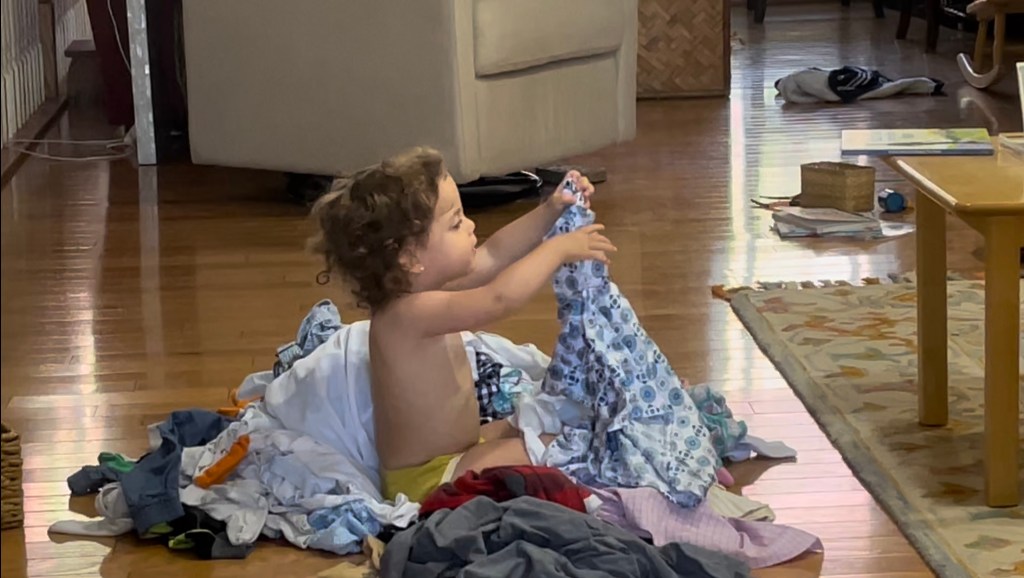
Family life is not always about the child. It is about living in a community and sometimes they gotta get dressed, eat breakfast, and sit on the toilet NOW because it affects people other than them. At other times, we adults must remember that all timing in the world does not revolve around our desires for efficiency and accomplishment. We must put our desires aside and respect the pace of the child when we can. Let them climb up the stairs backwards, or crawl into the kitchen alongside their baby brother even when it will take longer. Let them sit in the pile of clean laundry and put on 3 pairs of underwear without taking any off. Our folding can wait, concentration is happening. It is through concentrated trial and error that not only new skills are gained but that the inner spirit of the child is formed.
By allowing parts of our day to follow the pace of the child we give them space and time to explore their environment, and this encourages a sense of curiosity, creativity, and problem-solving skills. When left to play on their own, without constant pressure to move it along, they have the chance to concentrate deeply on what they are doing and where their interest falls. This concentration develops strong focus, attention, and discipline. They begin to know what their abilities are and feel a sense of independence and self-reliance. When they are given the space and time to make choices and decisions by themselves, develop innovative thinking skills, enhance their problem-solving abilities, and build a foundation for future creative endeavors.
Finally, dude, who wants to be hurried along all the time! Just like adults, children need to recharge their seemingly “everlasting” batteries. Slowing down allows them to rest, process their experiences, and regain their energy. It provides a respite from the stimulation they encounter constantly. Rested and recharged, they can then engage in more meaningful interactions and learning experiences.
Finding the right balance between the needs of the community and the needs of the child is a never-ending quest. Home is not a Montessori school. The world does not revolve around the child and their desires, but no matter the age, a child is a valuable member of the family and should be viewed as that. So sometimes they gotta hurry ‘cause you gotta get to work but sometimes you gotta slow down cause they gotta get to work.

 Montessori Gone Mama